Lumina:
Your Learning Partner
A scenario immersion for the future of neurodivergent learning.
A speculative AI learning app designed around Sophia, a brilliant 9-year-old autistic learner, exploring how future education systems might support cognitive difference without turning support into control.
Designed for every kind of mind.
At a glance
- Role
- Futures researcher, UX strategist, speculative product designer
- Course
- Parsons Immersive Scenario Planning
- Methods
- Manoa / Four Futures, speculative design, artifact-based futures, UDL-informed UX
- Tools
- Figma, Lovable, AI prototyping, scenario mapping
- Output
- Interactive prototype + final scenario immersion + portfolio case study
- Audience
- Educators, parents, learning designers, AI product teams
How might AI reshape education systems for neurodivergent learners by 2035, and when does support become control?
Why This Matters
Many education systems still privilege linear output, standardized progress, speed, compliance, and written performance. For neurodivergent learners, this can make intelligence harder to see. This project asks what might happen if learning systems were designed around cognitive difference from the beginning.
Scenario Method
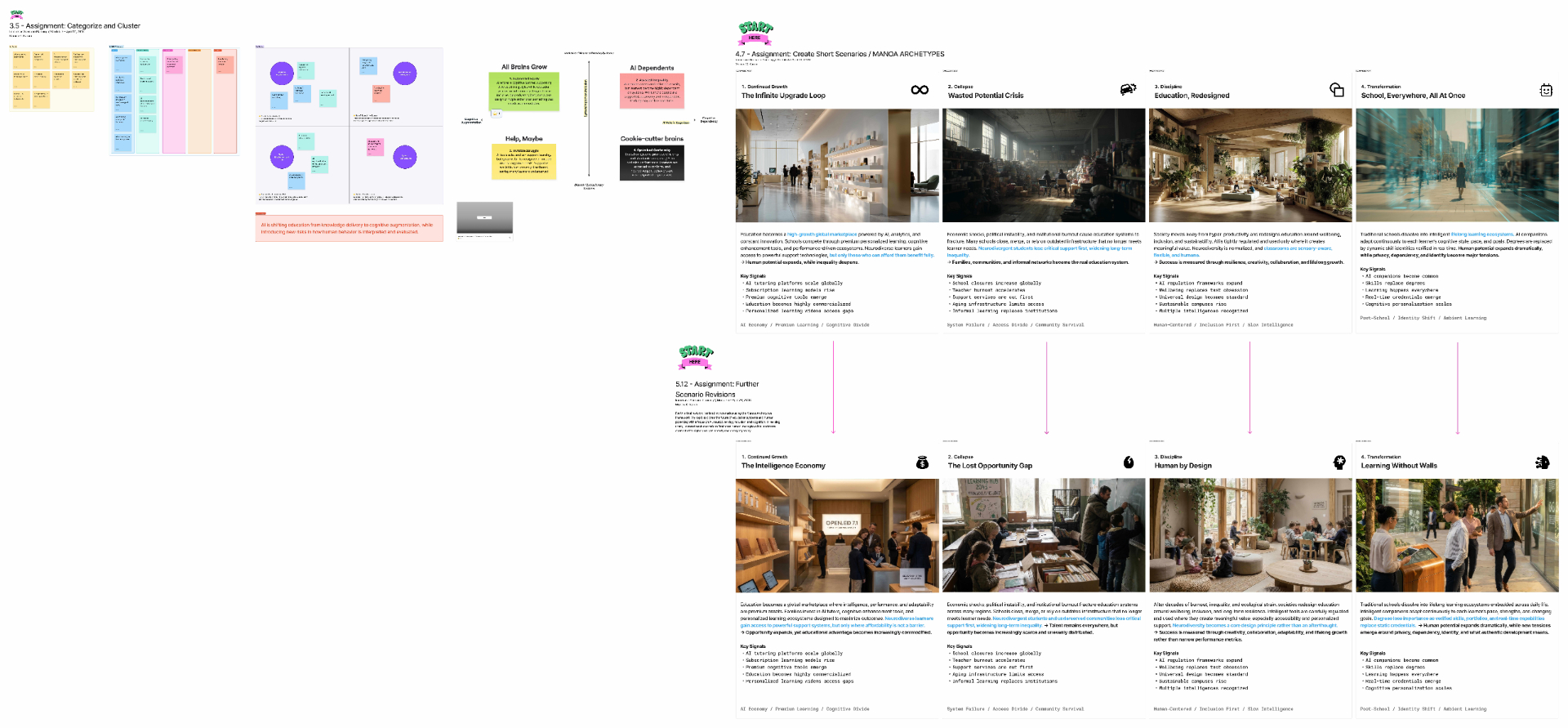
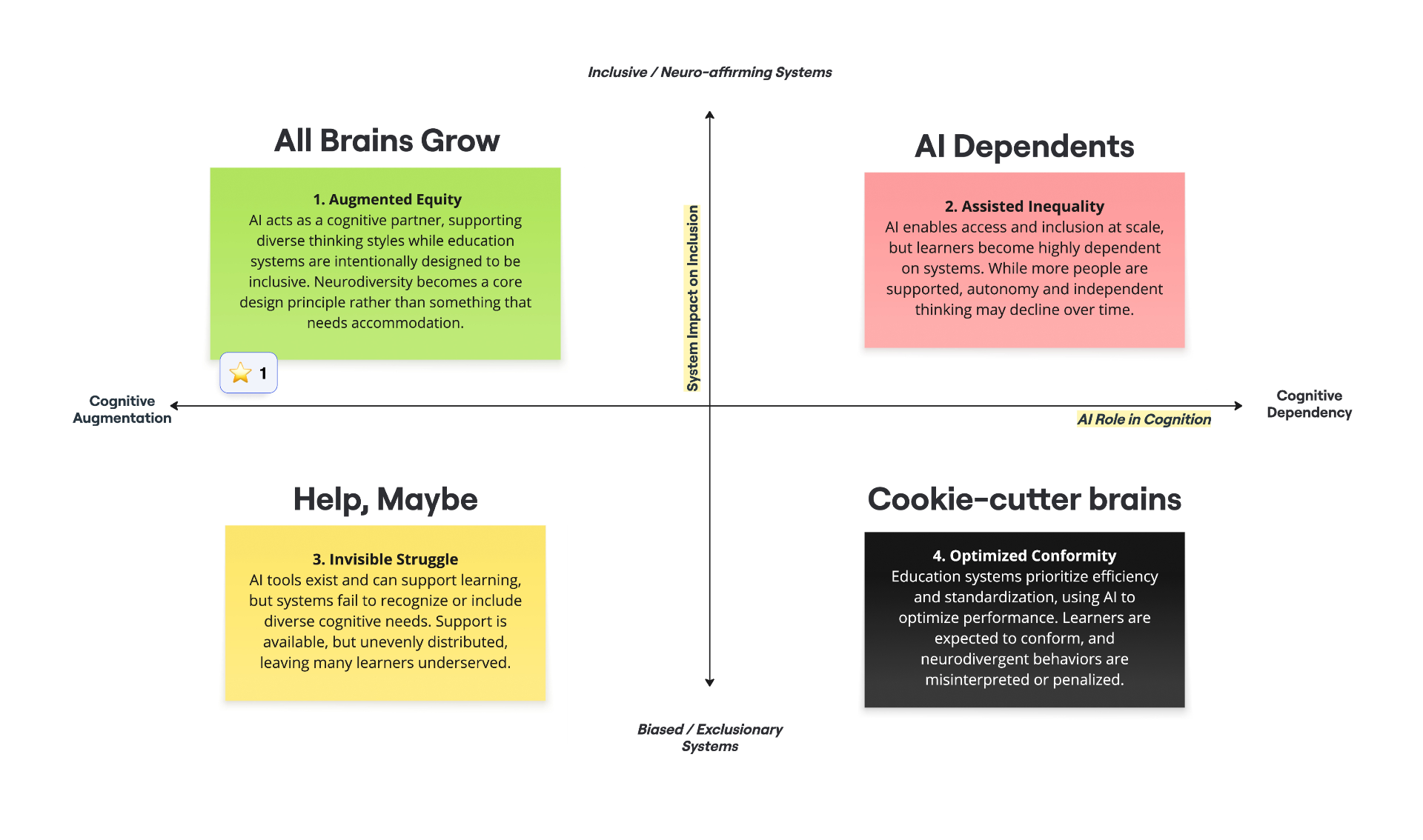
I used the Manoa / Four Futures method to explore multiple futures across continued growth, collapse, discipline, and transformation.
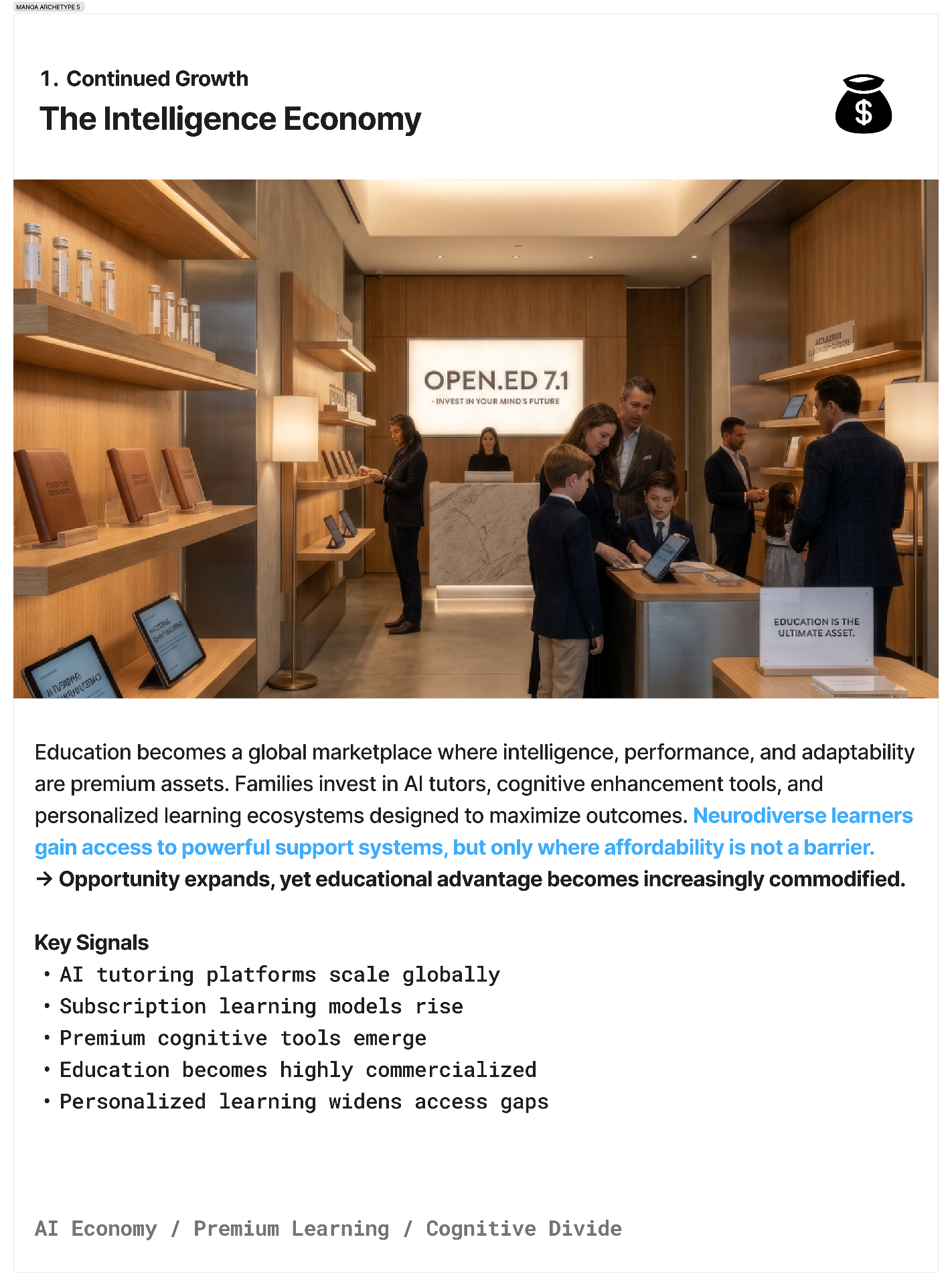
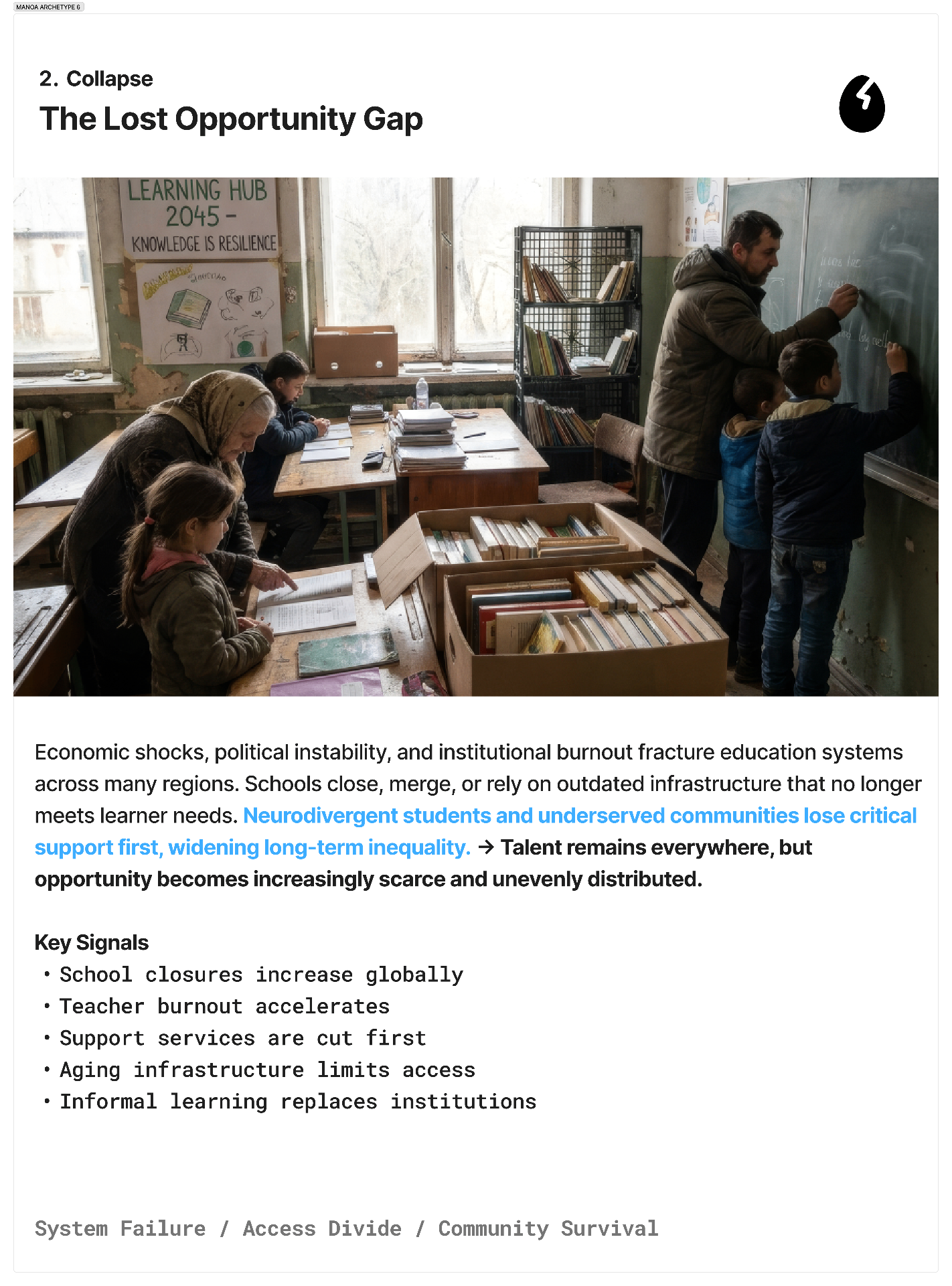
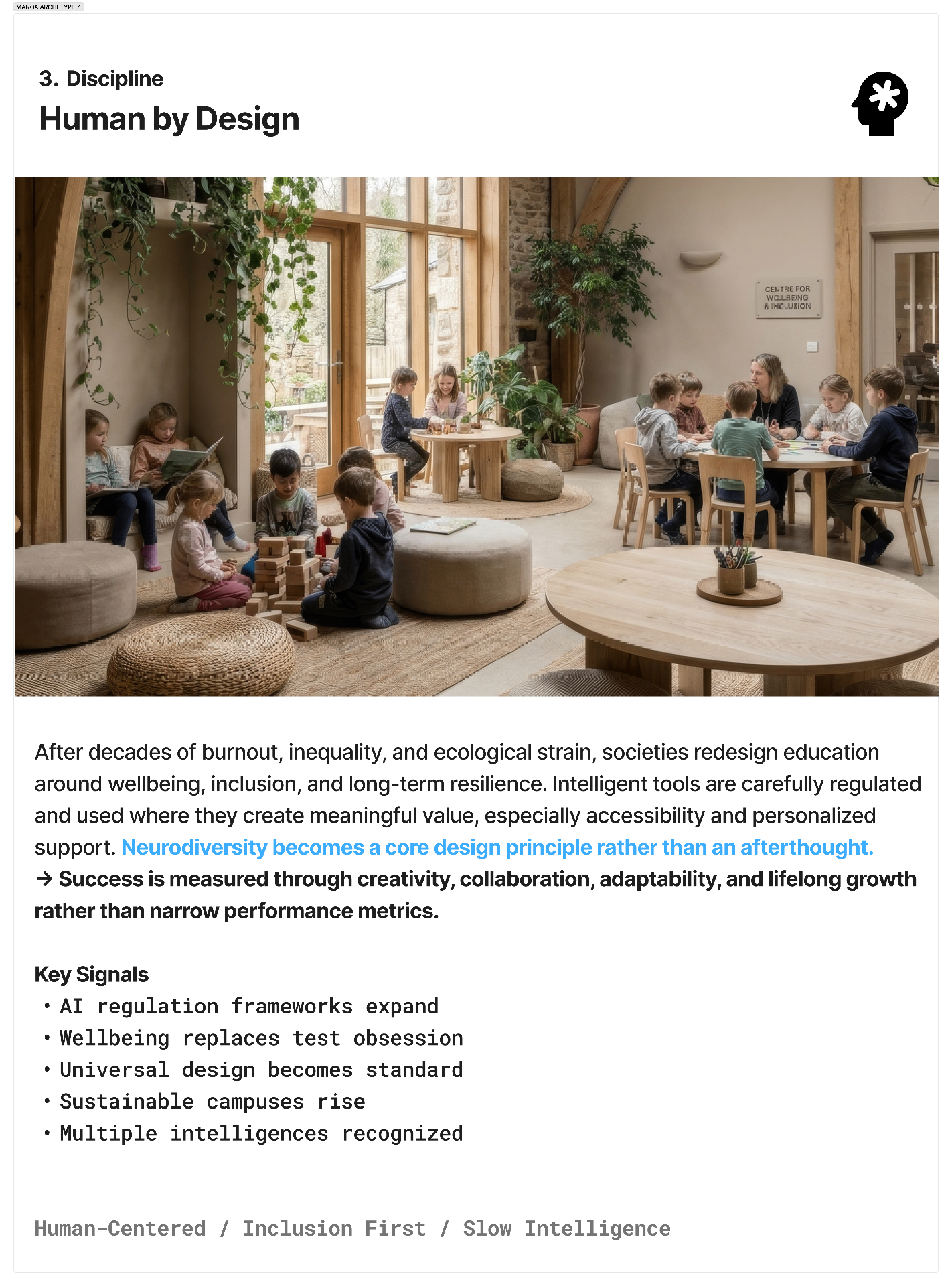
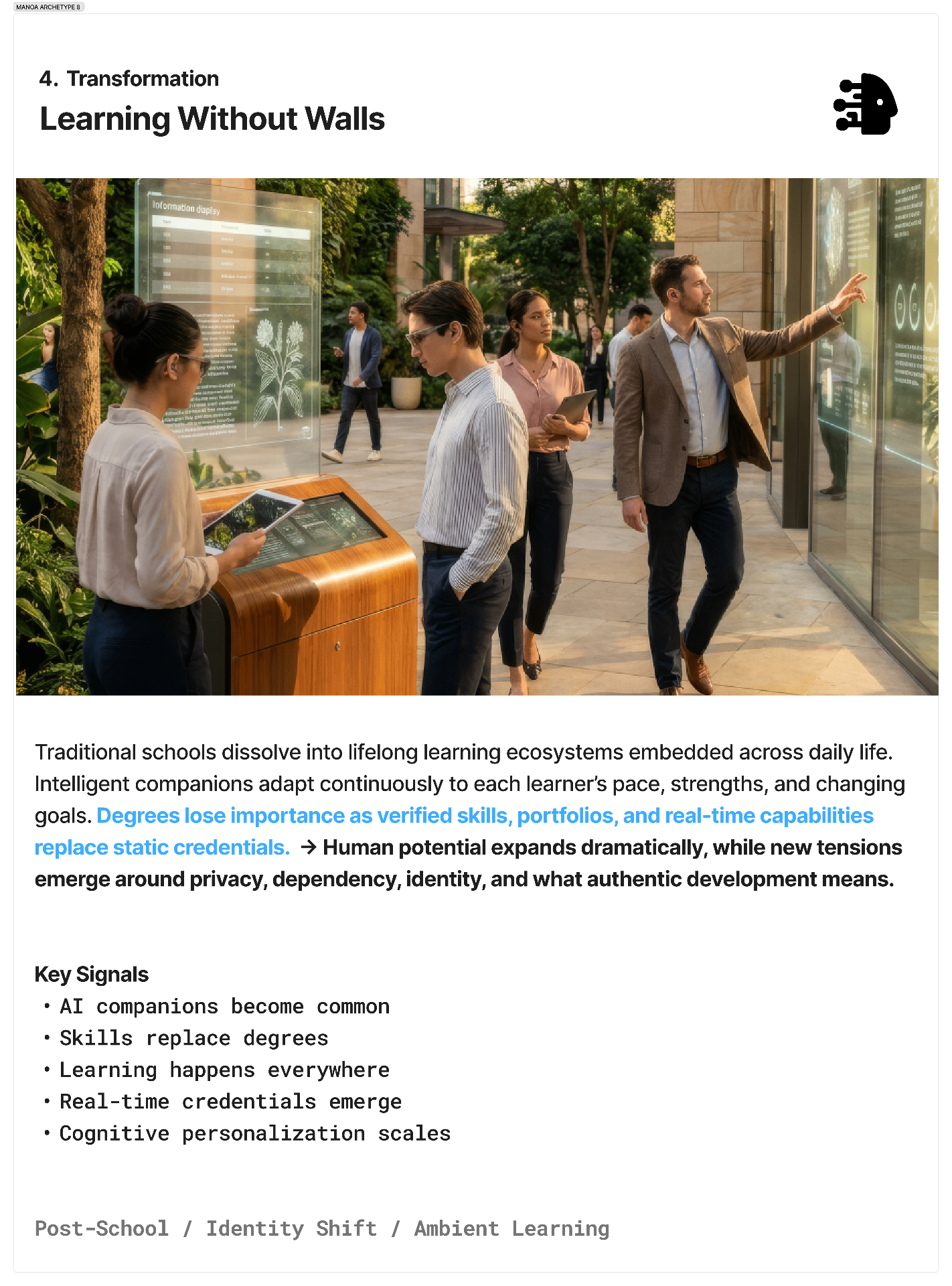
The final immersion focuses on the Transformation scenario: Human by Design.
Human by Design
In this future, education systems are designed around cognitive difference rather than standardization. Neurodiversity becomes a core design principle. AI supports learner agency, emotional safety, flexible expression, pattern recognition, and individualized pathways.
AI can support a child beautifully, but it is still interpreting the child.
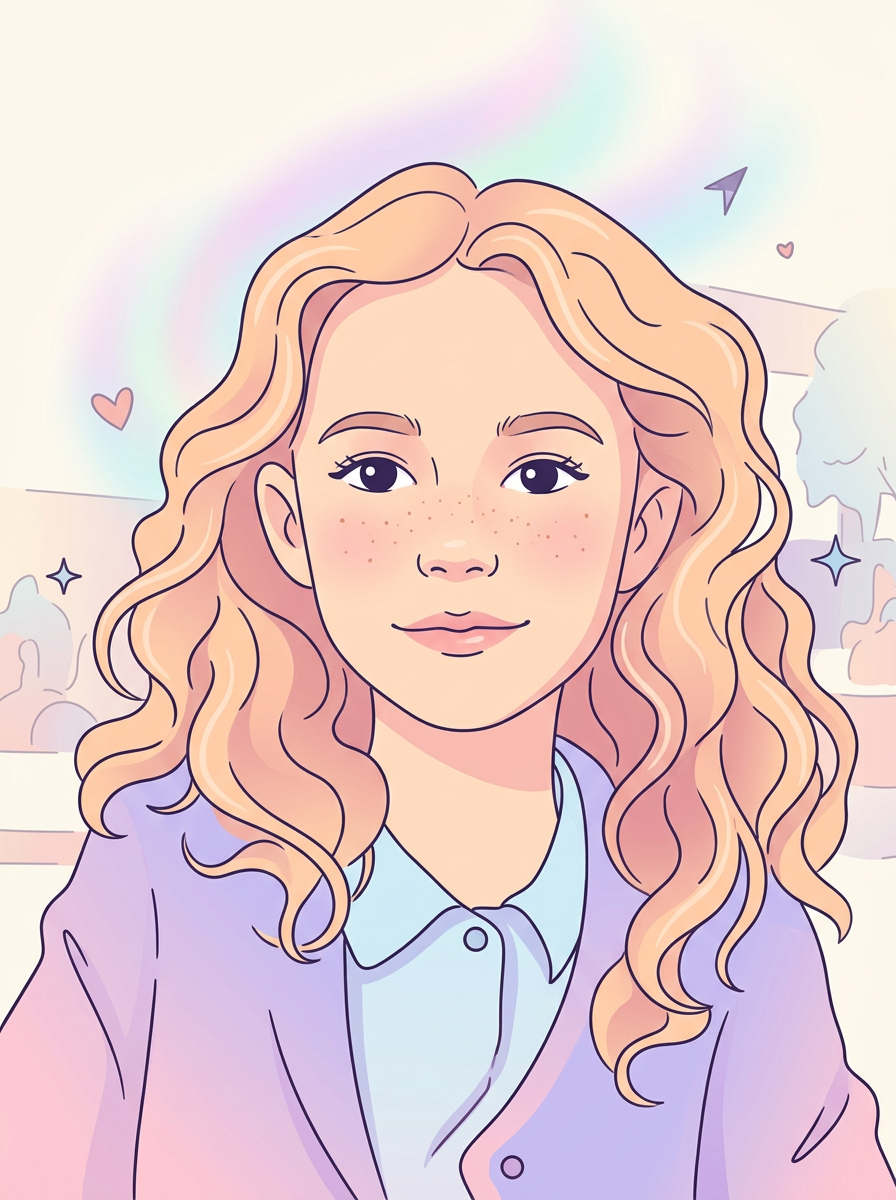
Sophia · age 9
Pattern seeker · Visual thinker
Meet Sophia
Sophia is a brilliant 9-year-old autistic learner. Her thinking is visual, associative, deep, nonlinear, and curiosity-driven.
Sophia is the expert on Sophia.
Lumina: Your Learning Partner
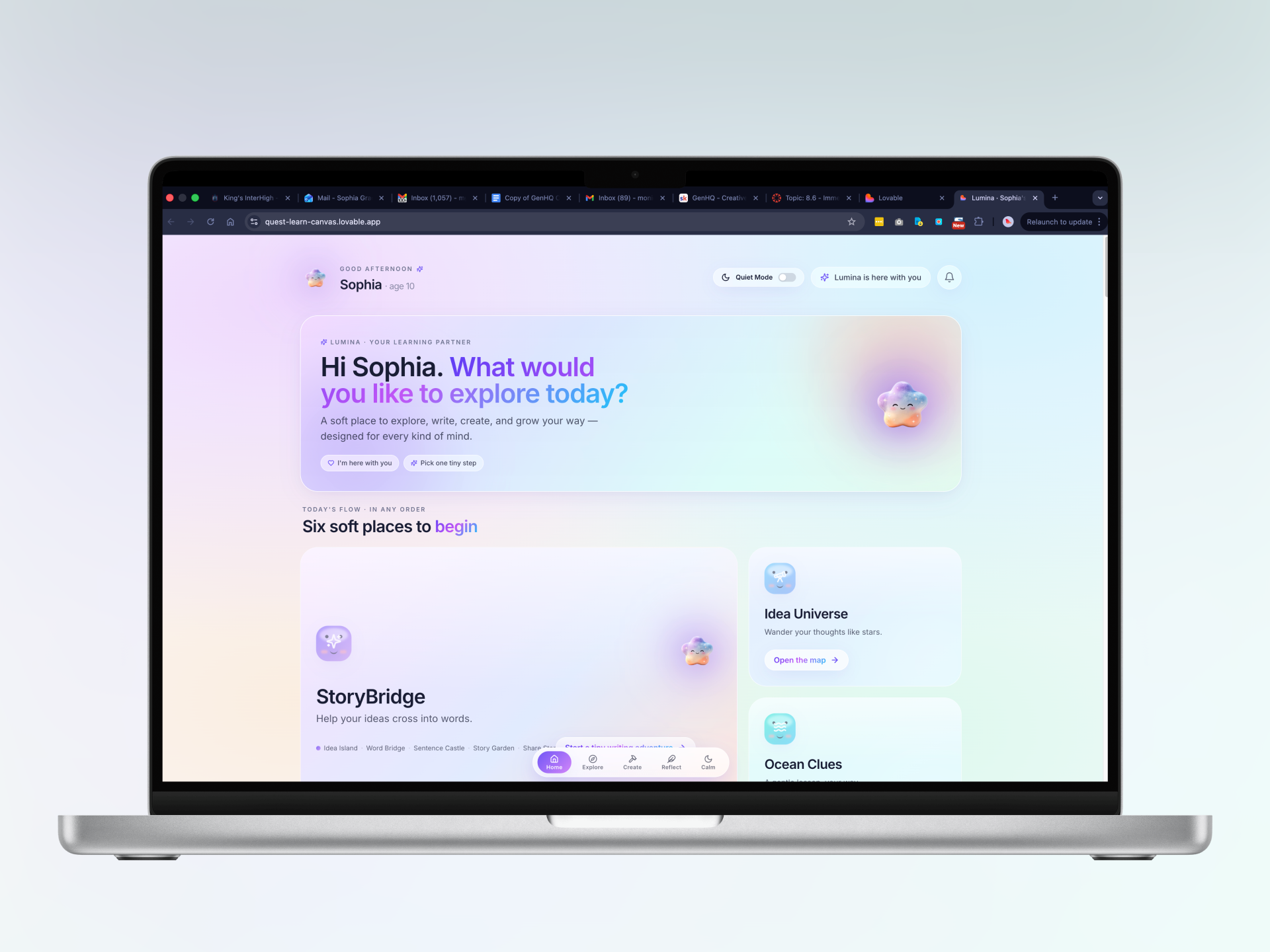
Lumina is a speculative AI learning partner designed to help Sophia explore ideas, write, regulate, and understand her own learning patterns, without grades, scores, or pressure.
Feature Walkthrough
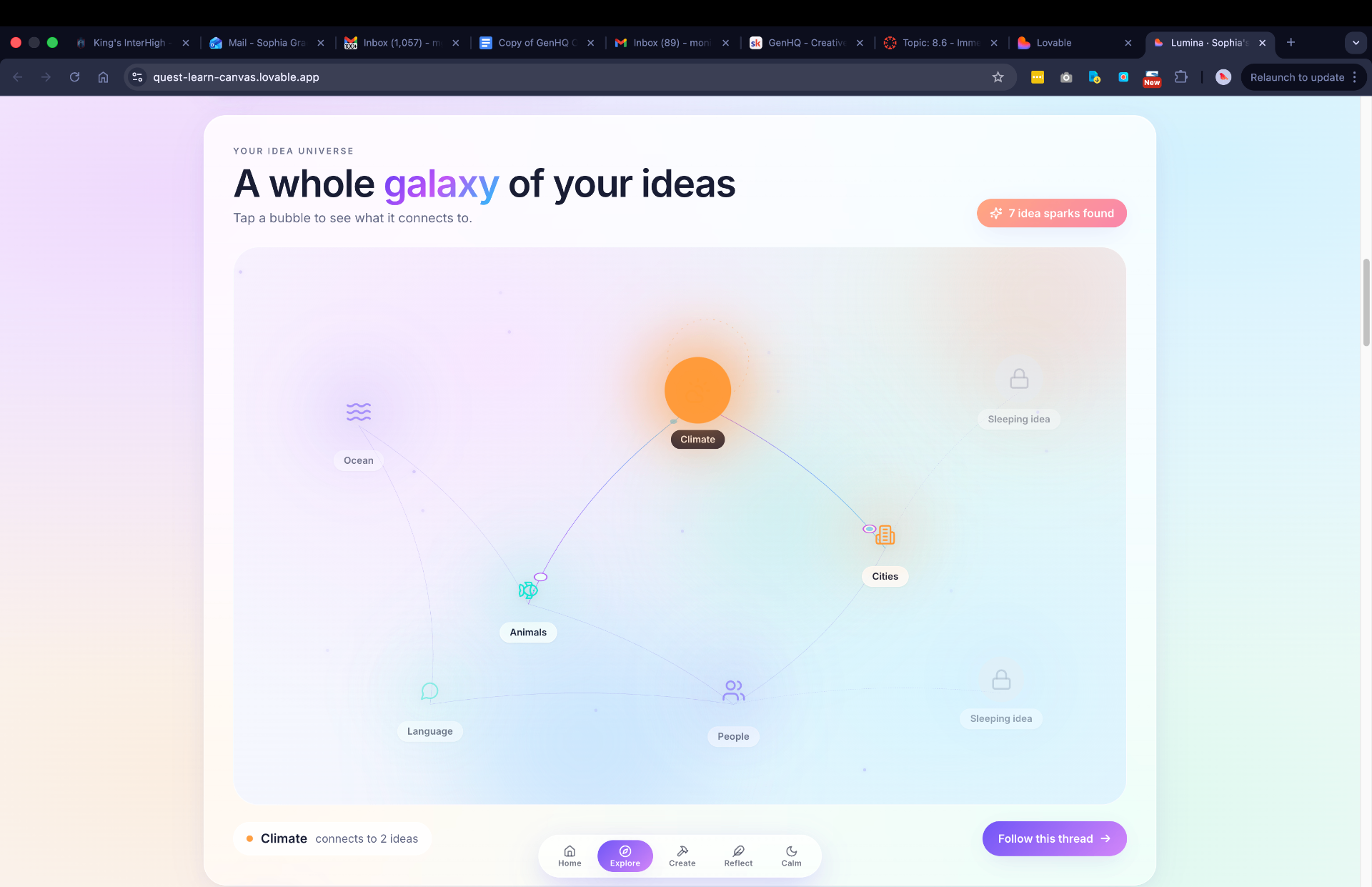
Idea Universe
Sophia explores connected ideas visually, turning nonlinear thinking into a navigable idea map.
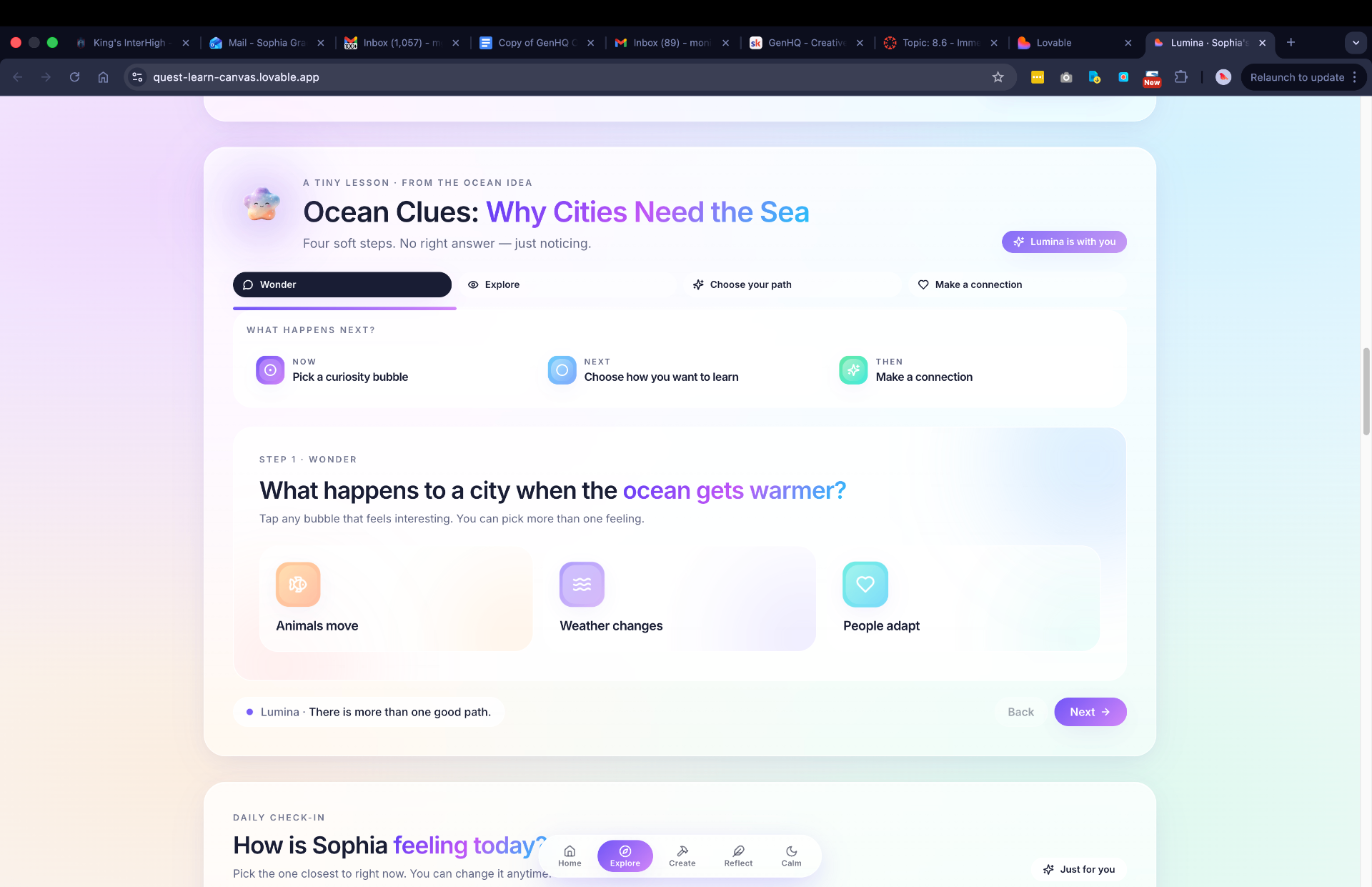
Ocean Clues
A mini lesson connecting oceans, animals, climate, cities, and people through visual, choice-based learning.
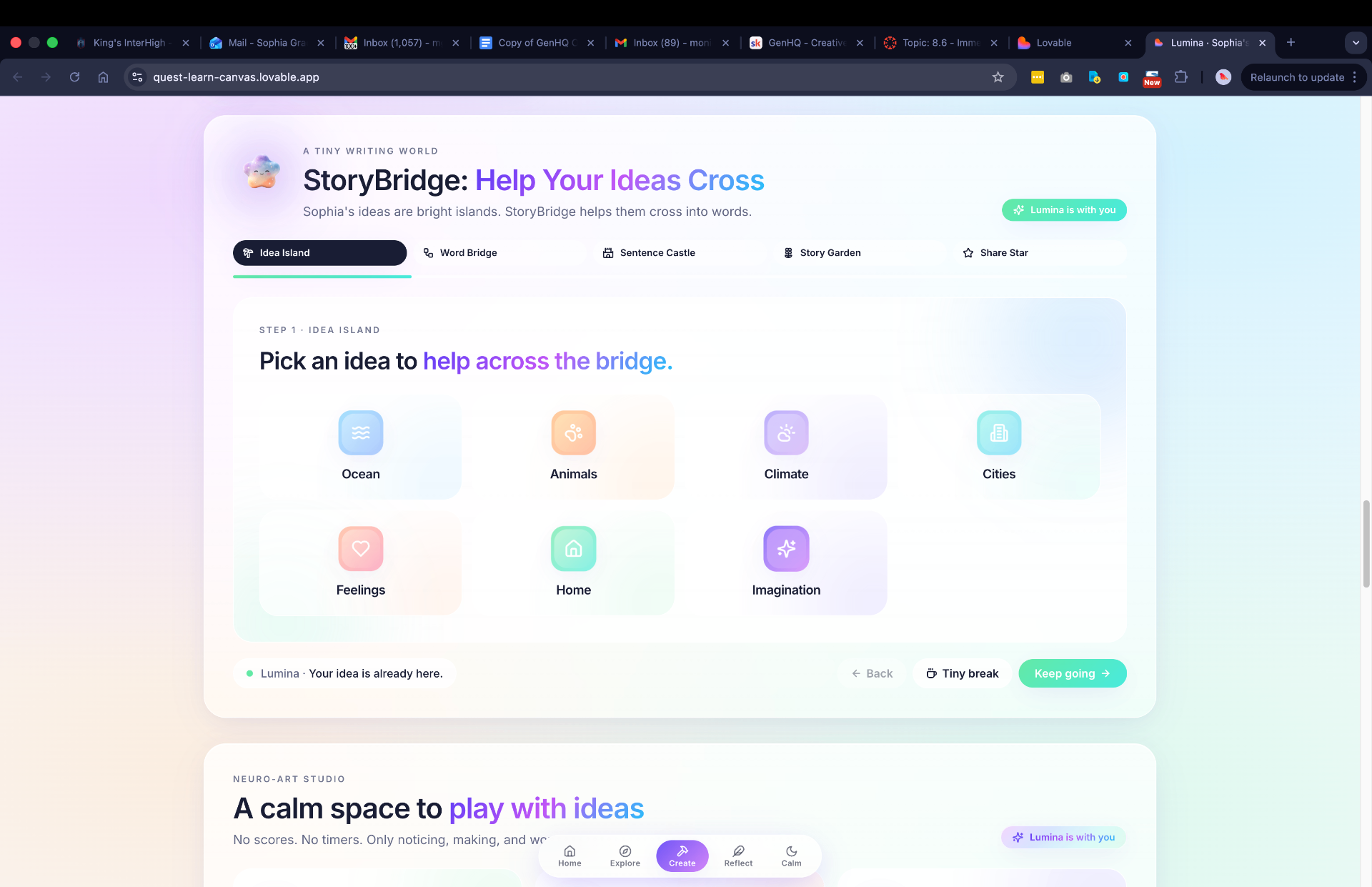
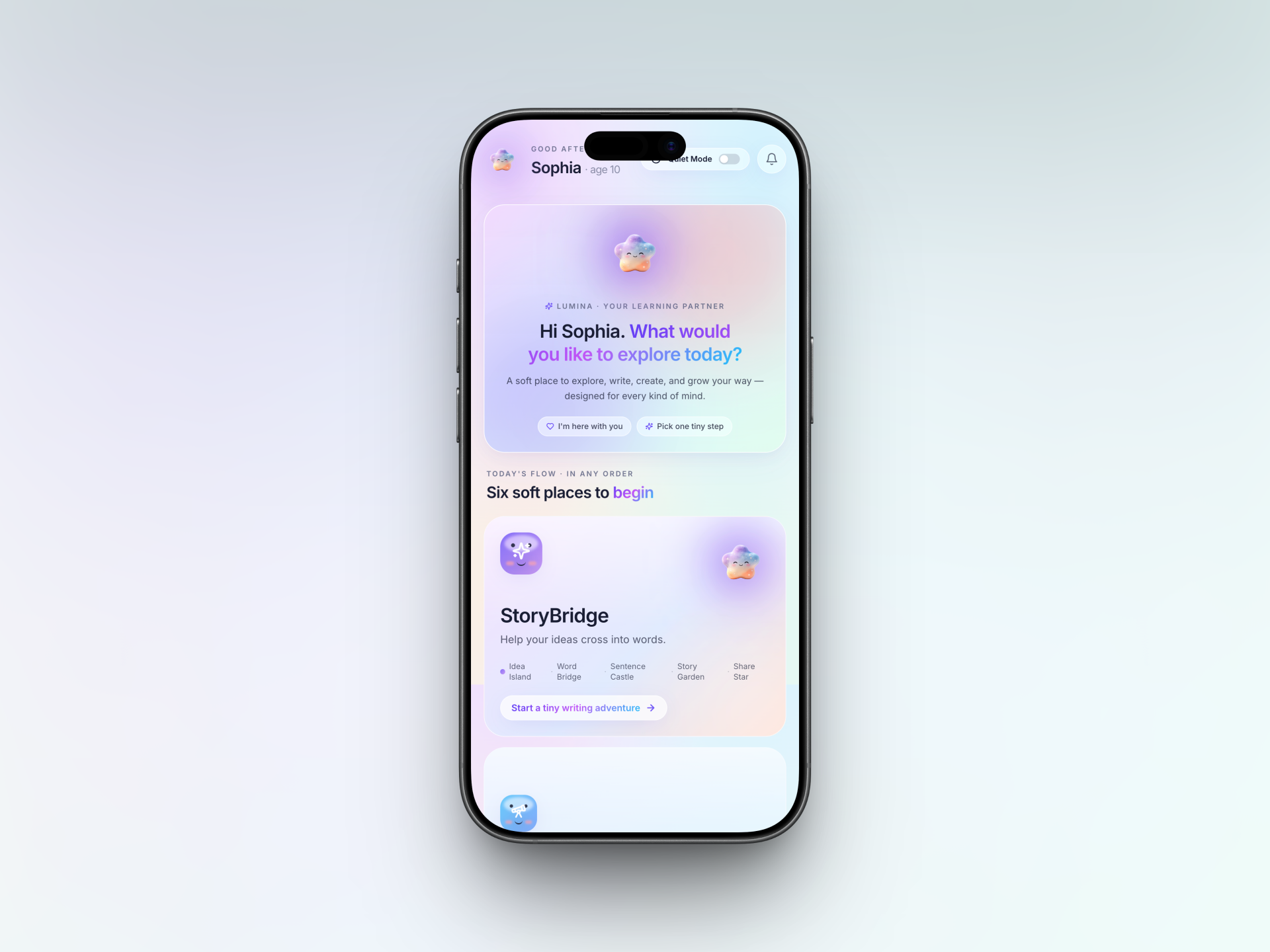
StoryBridge
A writing mini-game that helps Sophia move from big ideas into words and sentences through tiny visual steps.
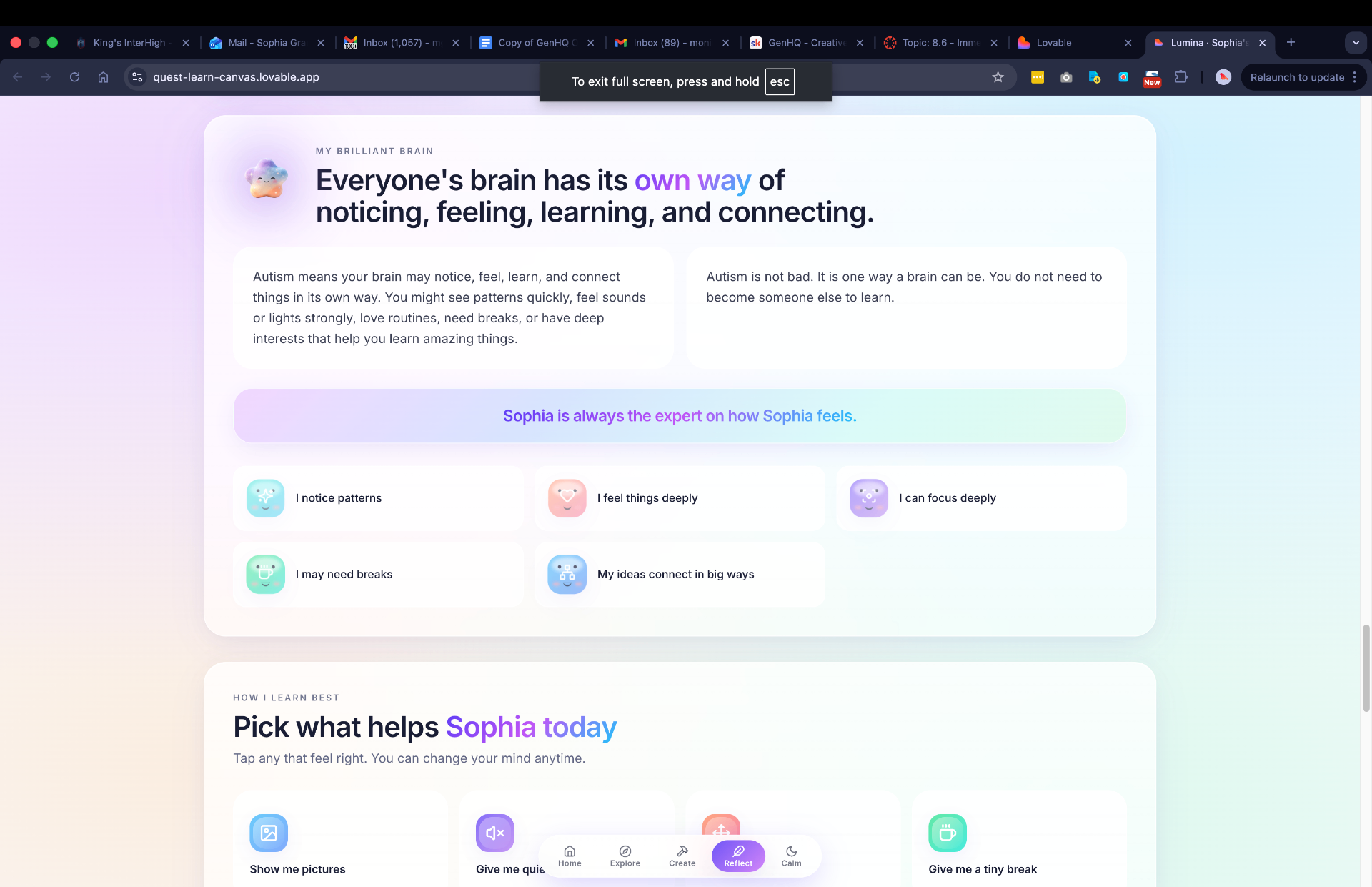
My Brilliant Brain
A neurodivergent-affirming section that explains autism through strengths, self-knowledge, and agency.
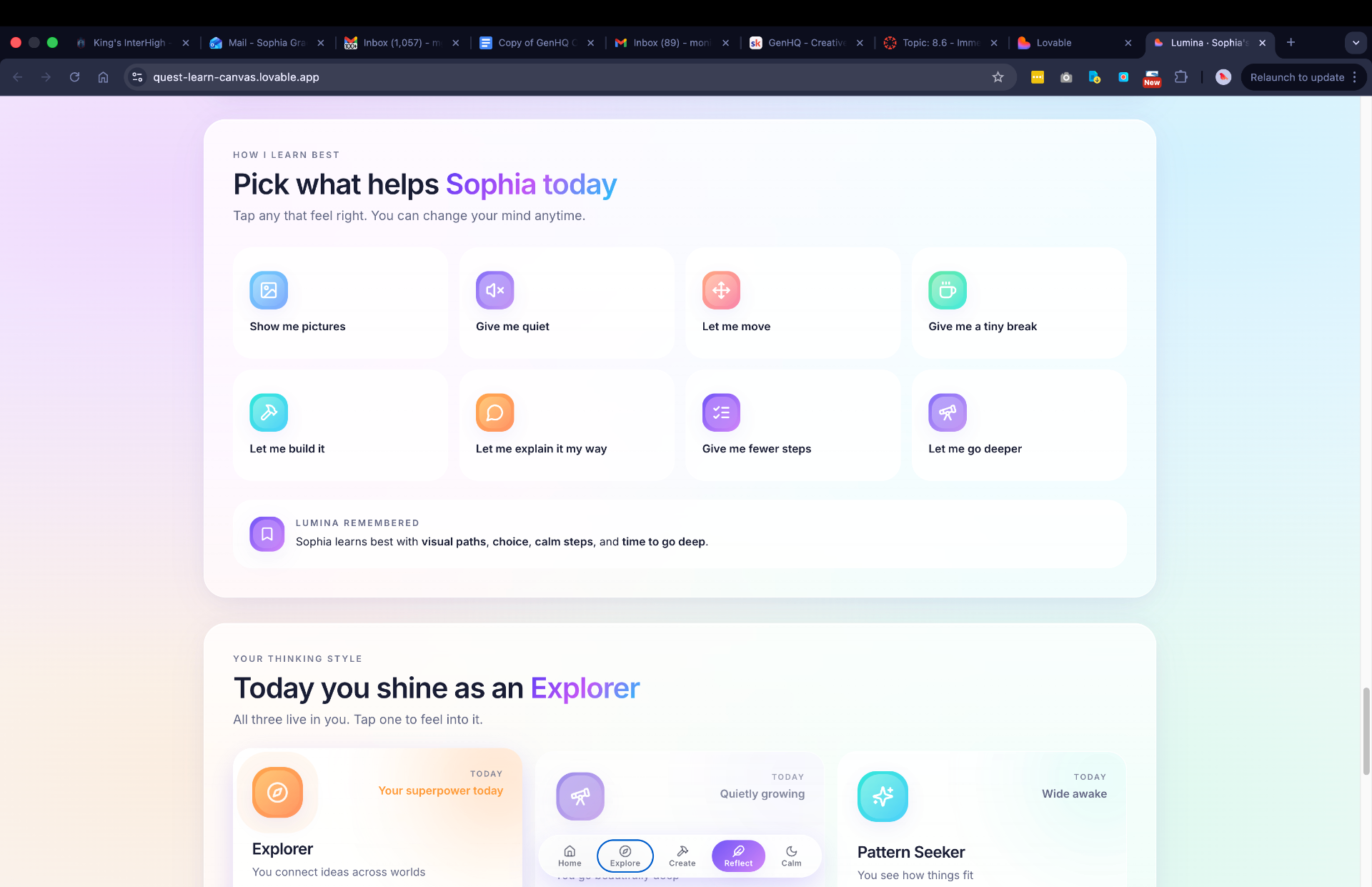
Lumina's Understanding
An AI reflection layer that makes interpretation visible and lets Sophia correct what the system thinks it noticed.
Five guiding principles
No grades, no pressure.
Choice before correction.
Visual structure over verbal overload.
Regulation is part of learning.
AI interprets, but the child defines.
When Does Support Become Control?
Lumina is intentionally hopeful and critical. It shows how AI could support a neurodivergent child beautifully, while also making visible the risk that AI systems may label, steer, or misinterpret cognition.
"Lumina makes gentle guesses. Sophia can always correct it."
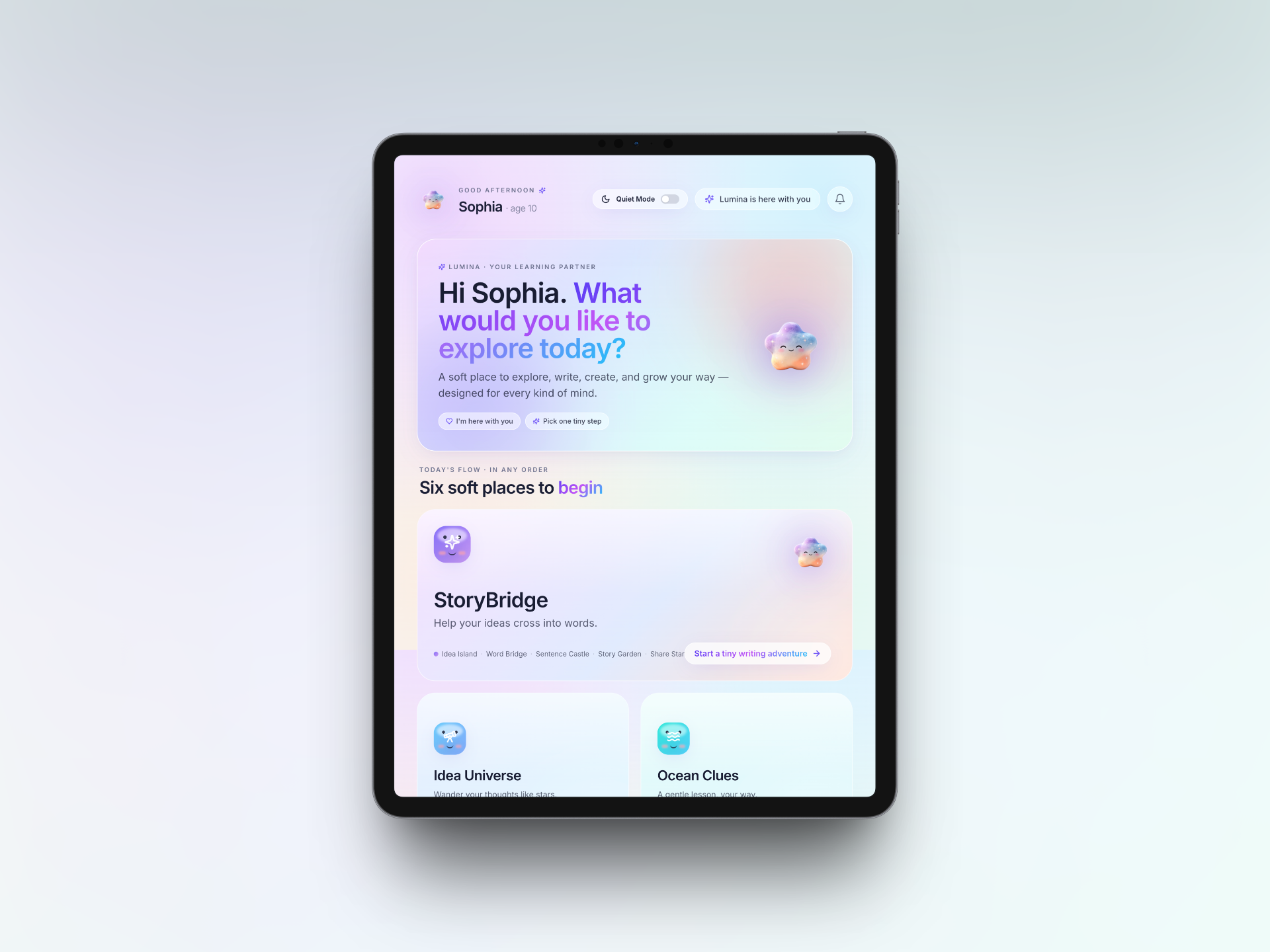
Designed Across Screens
The prototype is designed to feel like a real learning companion across desktop, tablet, and mobile contexts.
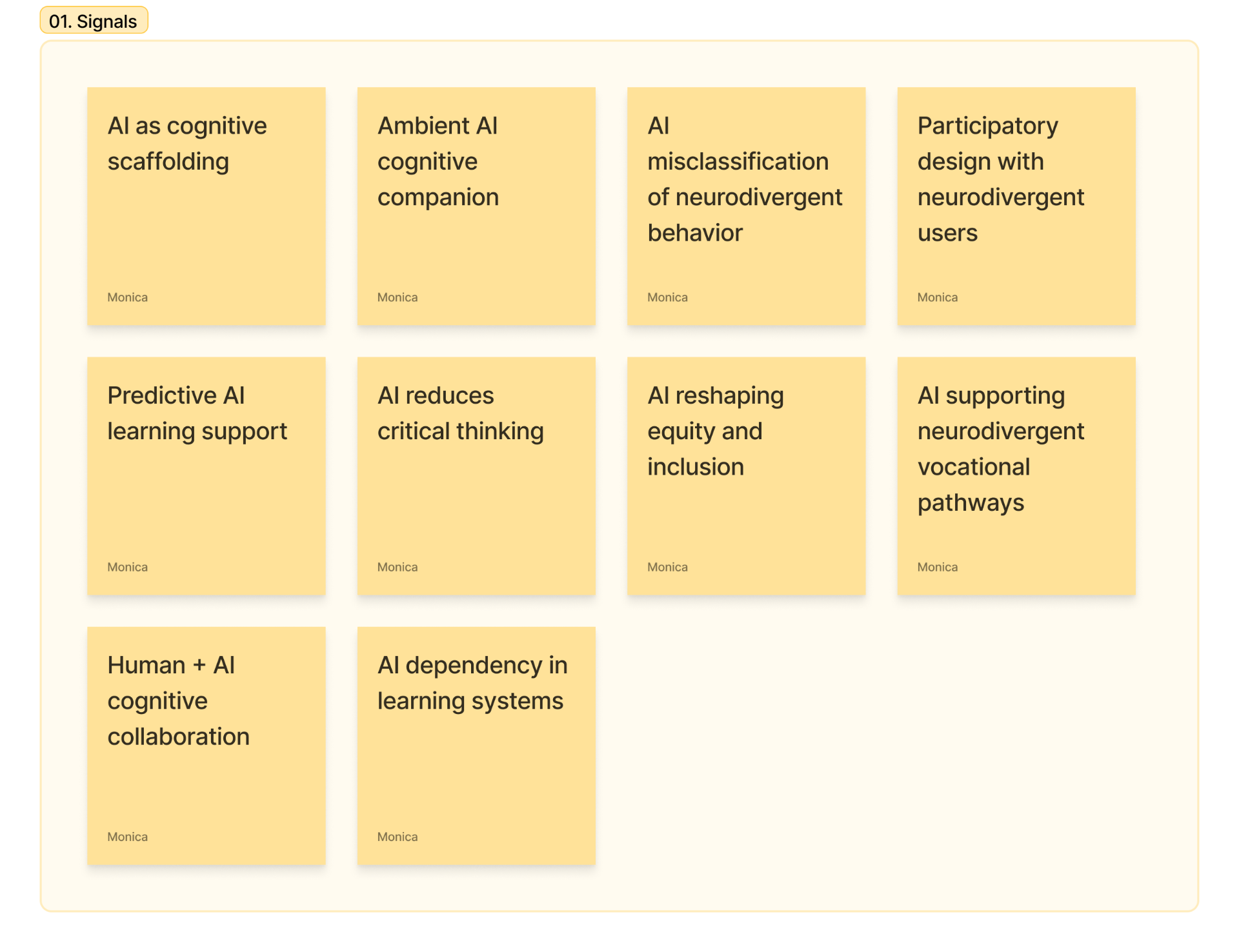
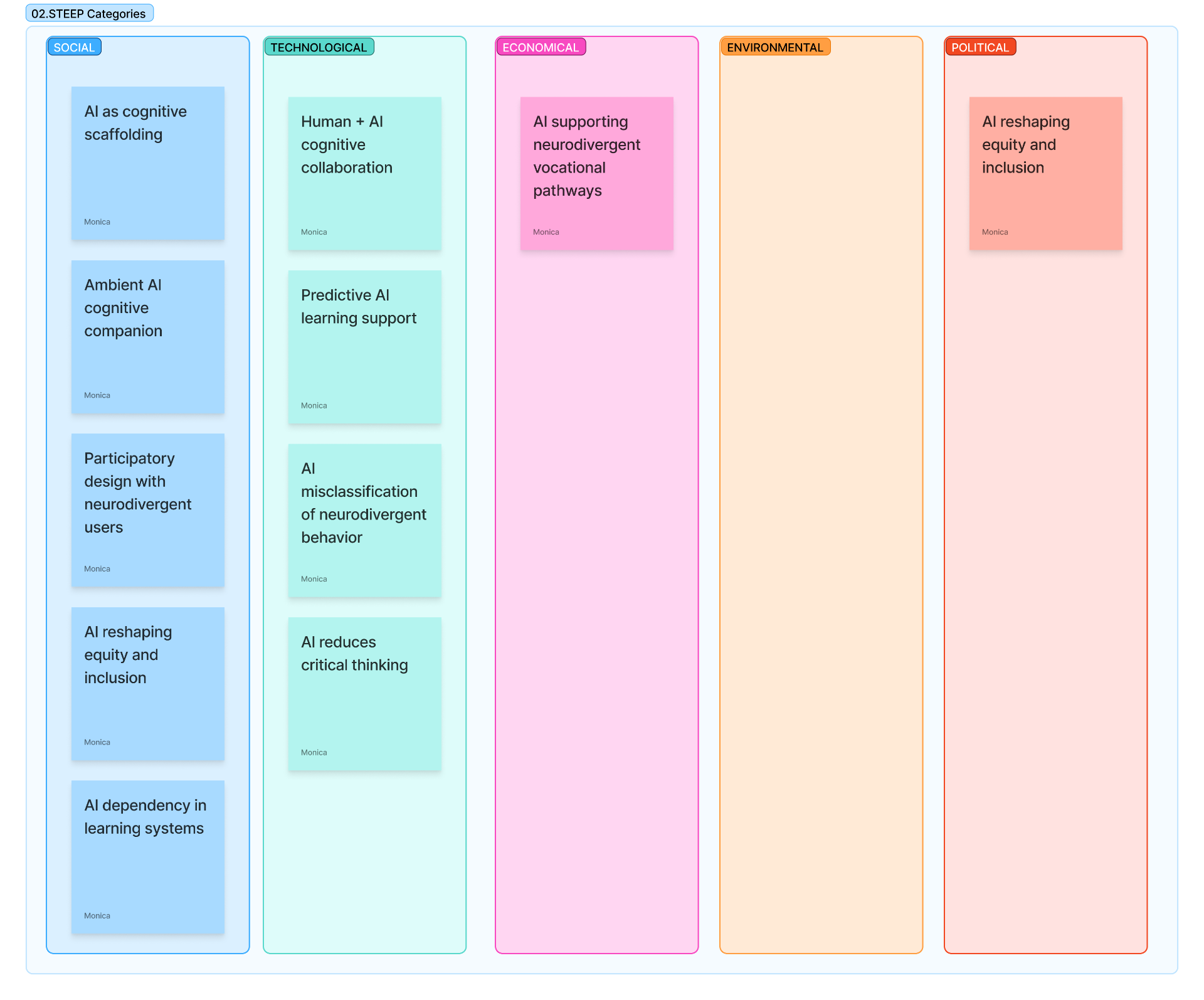
From Scenario Mapping to Immersion
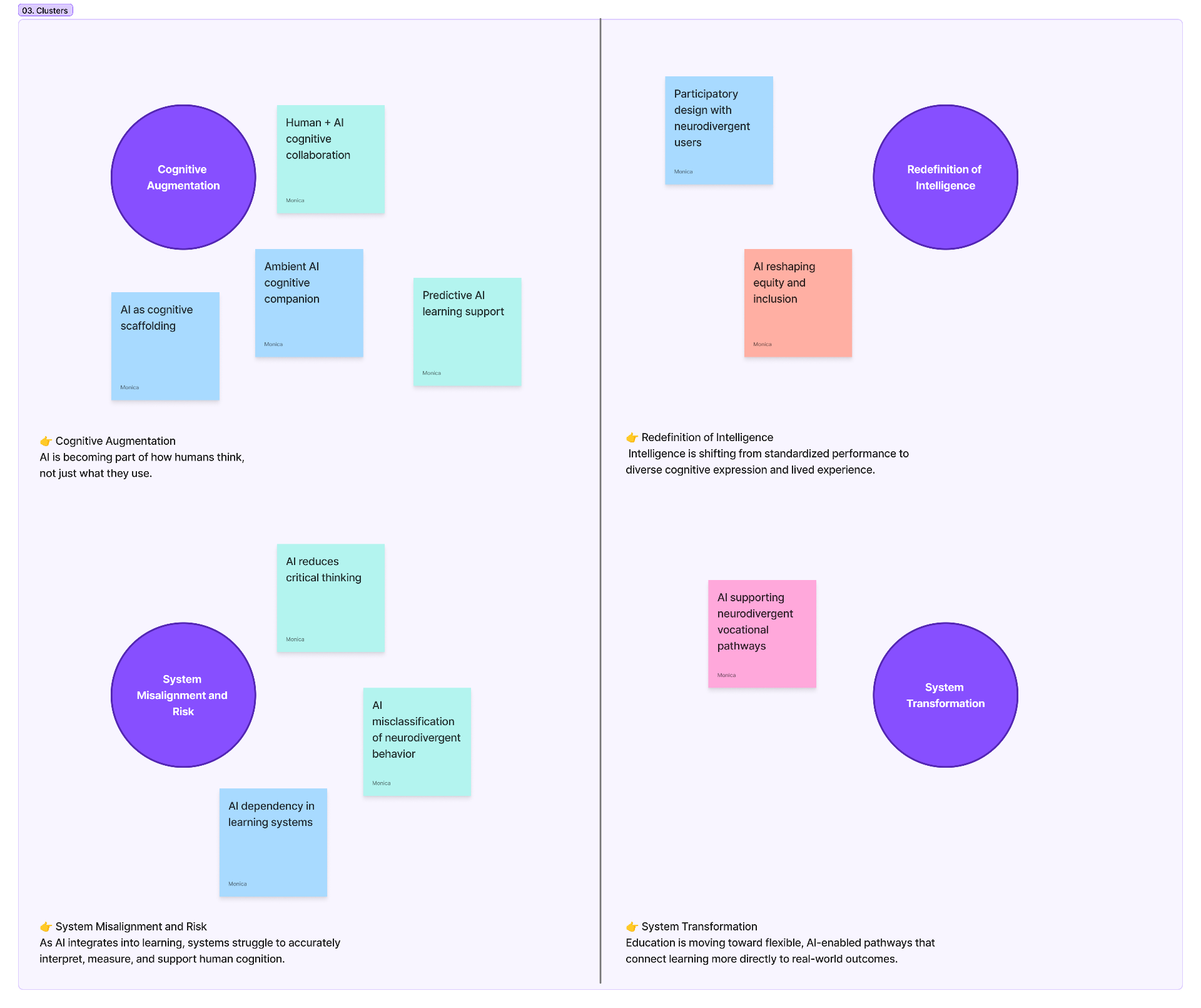
The project moved from signal clustering and scenario mapping into a speculative interface prototype, transforming text-heavy futures work into an interactive learning artifact.

What if a learning system saw nonlinear thinking as intelligence, not distraction?
Feedback I'd Love
- 01Does the prototype clearly communicate the Human by Design scenario?
- 02Does it feel immersive rather than only explanatory?
- 03Is the ethical tension between support and control clear?
- 04Which feature feels strongest: Idea Universe, Ocean Clues, StoryBridge, My Brilliant Brain, or Lumina's Understanding?
- 05What would make this more powerful as a speculative artifact?